October 10, 2024
A Brief History of Mostly Serious
A brief history of Mostly Serious, from its founding in 2010 to the present day.
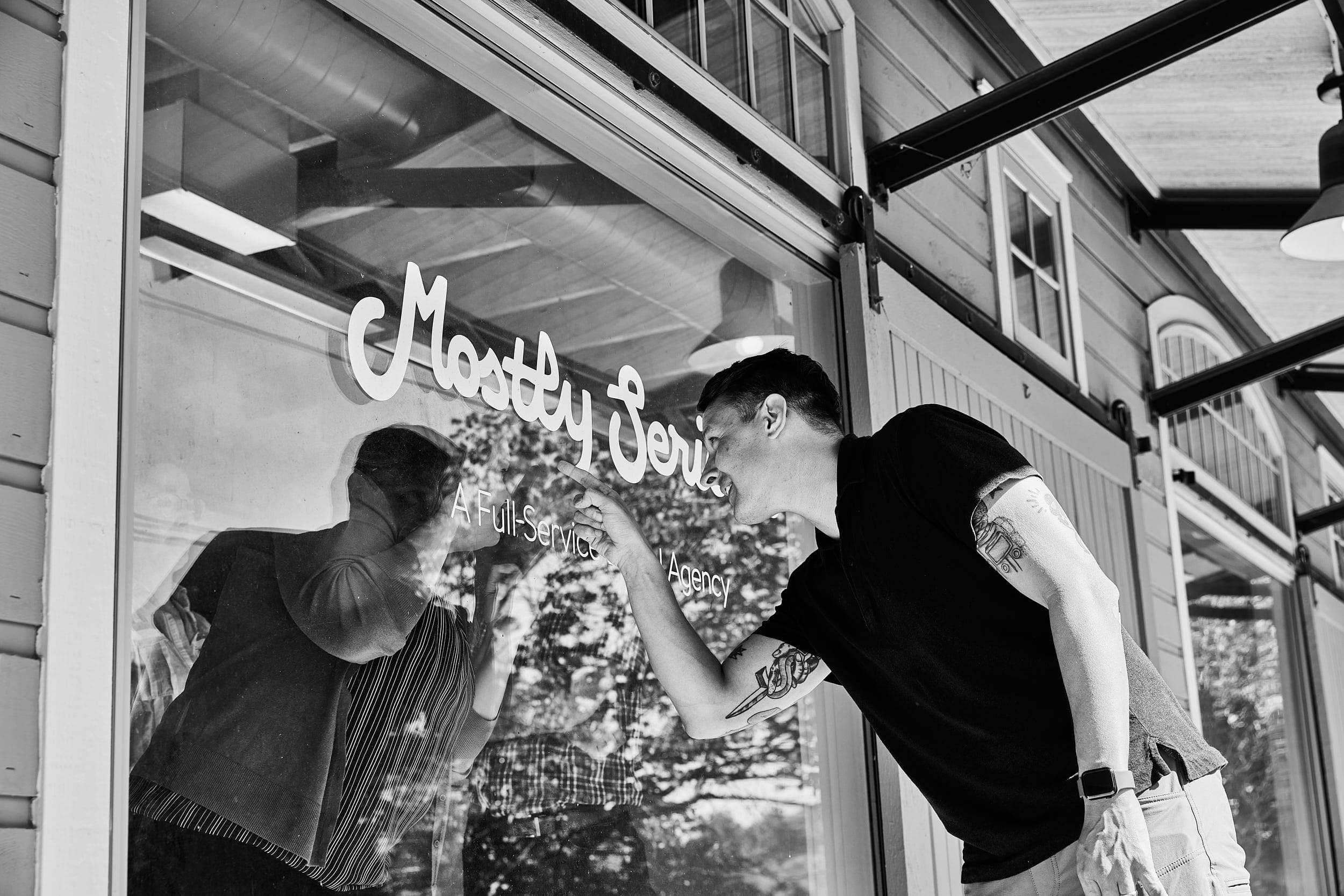
Mostly Serious was founded on October 10, 2010. I'm not actually sure that was the day, but it was early October and it was 2010 and if I have the option to say 10/10/10 then I'm going to say that.
I worked with Joe Donohue at one80one, a weird little startup agency owned by a shady supplement manufacturer and run by a guy who maybe read the first three pages of an overrated business book and then failed his way into a CEO role. Joe was a writer and I was a designer. When the agency inevitably shuttered, both Joe and I needed jobs. We saw the writing on the wall and had already begun the process of creating a new agency. I was working freelance before joining the agency, so the shift felt natural. We took a handful of the active projects so the clients weren't screwed, which also gave us a little runway to spin up the new thing.
Back then there were a lot of traditional ad agencies and a lot of web shops. But the established agencies sucked at building for the web and the web folks sucked at being reliable. Clients were often left to choose between overpriced mediocre results or great work that may or may not ever launch. We thought we could do better.
My wife, Laura, was my girlfriend at the time and she joined to run our accounts. She ended up running a lot more than accounts. You'd think that was a disastrous idea for our relationship, but we worked well together. We still do. When we were trying to come up with a name, we were texting back and forth and she suggested something silly, to which I responded "are you serious?" "Mostly" she said. That's how we got our name.
We rented a house in a cute neighborhood and turned an upstairs bedroom into the first Mostly Serious office. An adjacent bedroom is where I beat Joe at NBA 2K almost every day. Sometimes he would throw tantrums and leave work yelling at me about how I was a giant asshole. I think I was just competitive. Even still, those initial years were rocky and Joe was always steady. I didn't tell him often enough how much I appreciated that.
We became the go-to web resource for two large, competing food service agencies, Marlin and Noble. We worked with big name clients like Bush's Baked Beans, Nestlé, Starbucks, Tyson, and others. After the initial appeal of working with household names wore off, it often felt like the most soul crushing work. It's hard to move the needle for a company with so many stakeholders and gatekeepers. This experience is one reason we're attracted to working with companies in the $50M–$750M revenue range. It's satisfying to move fast, create great work, and make a direct impact on the lives of the folks we work with day to day.
During this period we landed a few direct clients we had no business landing. I wouldn't have admitted it at the time, but it's true. The important thing is that the clients never knew it. We delivered on our promises. One of those clients was CoxHealth and we've worked with them continually ever since. I'm very proud of that.
We added two business partners to support growth and inject new expertise. This was before I learned how to hire well when expanding into new service lines or markets. And before I realized that it's often smarter to do whatever you can to get the work done without hiring for as long as possible. Business partnerships are hard, and adding new partners before we had a clear direction created a lot of unnecessary headaches that took our attention away from building the company. I was young, ambitious, and moving a little too fast. That's okay.
Growth slowed around 2015–2016 and some of the work we produced didn't live up to our standards. We made a lot of unforced errors. We brought in business consultants to help us figure out how to transition from our teenage years into adulthood. That's how I met Spencer Harris, who would later become another business partner (the only remaining business partner, which maybe says more about him than me ... maybe). It's the type of working relationship I always thought Warren Buffett and Charlie Munger might have, but if they were more interested in philosophy and dimly lit English pubs than making money. We spent the next few years finding middle ground. I wanted a flat organization and he thought that was stupid. He wanted people to be in the office from 9am to 5pm and I thought that was stupid. We poured a new foundation out of the middle ground and built back up from there.
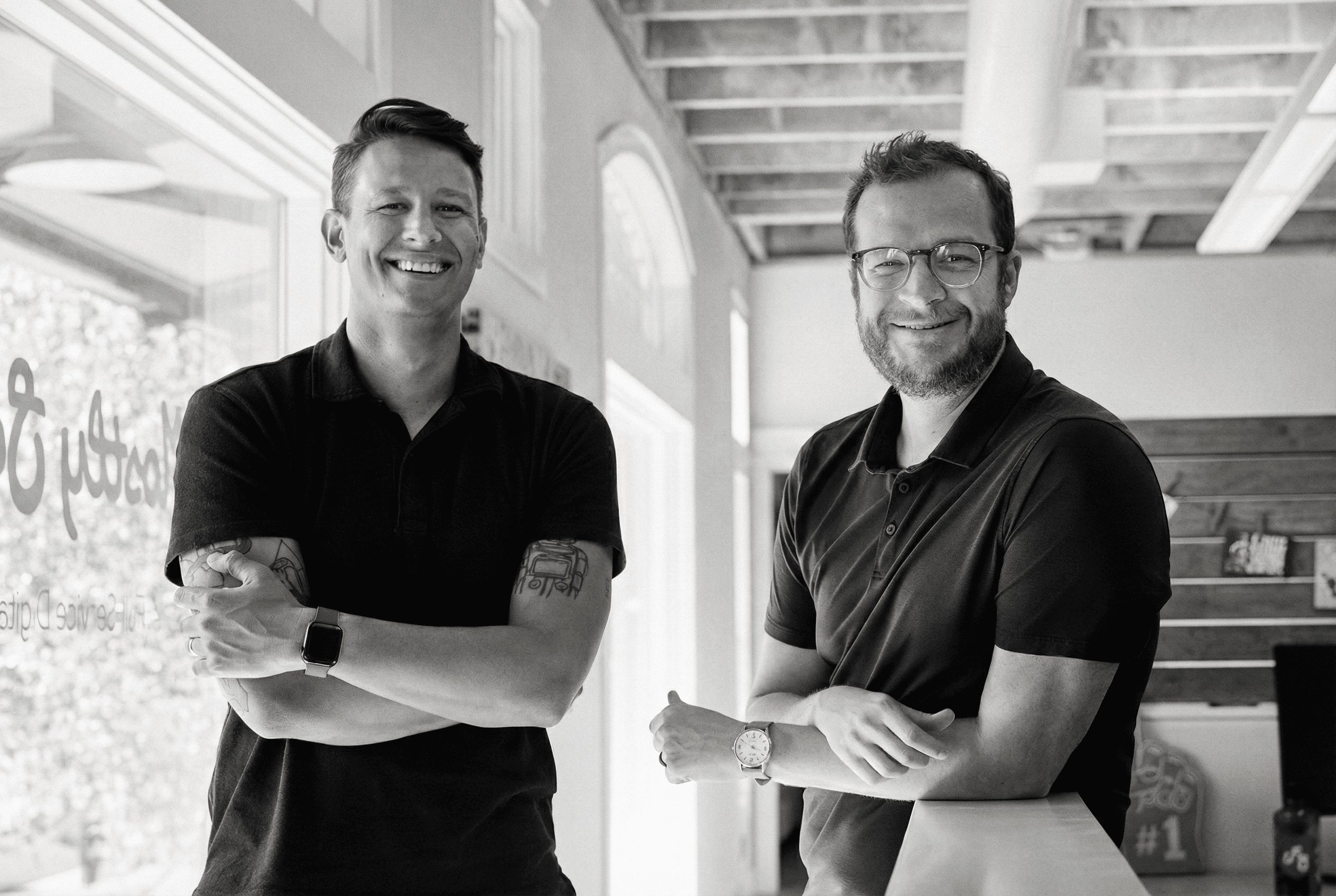
Spence suggested that we create core values. I thought that was a complete waste of time. We were losing money on projects, producing work I couldn't stand behind, and our revenue was stagnant — and we're going to pause to do some corporate nonsense? He was right. What I didn't realize until we started the process was that many people in the company had strong personal values, but we lacked a shared vocabulary for what we were building together. It seems obvious now, but at the time my knee-jerk oppositionality to anything I felt allergic to blinded me from seeing the benefit in some of that corporate nonsense. We created core values and they still drive us today.
Thus began our steady evolution toward becoming the type of agency we want to be. We're different now than we were then, but the foundation we poured has held up. Largely because there were a few key ingredients that make it easy to adapt to new challenges.
- Evolution
- We are in a continual state of change.
- Fallibility
- We accept that we'll never achieve the perfect solution — only the best imperfect one available to us now.
- Grit
- We have the sustained passion and perseverance to achieve long-term goals, even in the face of challenges, setbacks, or obstacles.
Out of those, only Grit is a Core Value. Maybe something our Evolution will correct.
From 2016–2019 we pushed through revenue stagnation and reestablished an admirable growth trajectory while doing our best work. We were able to pay our team members more and increase our benefits. I cried over a whiskey the night we struck a deal to offer a fully paid, top-tier health insurance policy to our team. We moved into a beautiful office in Galloway Village, a space that first jumped on my radar 10 years prior. We expanded our team, service lines, and client base.
Our hard work was rewarded with the Small Business of the Year Award from the Springfield Area Chamber of Commerce in 2019. I've never been much for awards. It always seemed to me that our clients should be handing them out; they know much more about the problems we solve. This one hit different, though. It was recognition from our community that we had built something worth looking up to. I'm very proud of that.
I want to make a bad joke about COVID, like "in 2020 this thing happened, you may have not heard about it, it was called COVID." But I'm not sure if we're making jokes about COVID yet. Let me know if we aren't and I probably won't remove this.
Anyway, in 2020 this thing happened, you may have not heard about it, it was called COVID. I paused writing this to see when we first mentioned COVID on Slack, and it was Molly Riddle-Nunn who first mentioned coronavirus on 01/30/20. On 02/27/20 I told Spence we were going to need to formulate a protocol in response to it. On 03/08/20 we encouraged people to work from home and, shortly after, we went from fully in-office to fully remote.
The week before we went remote we had four Groundwork presentations (the name of our large scale research effort before we got into the actual website work with our clients). We all went out and drank too much afterward. Then we didn't see each other in person for two years.
Within the next two weeks we lost $250,000 of signed work. I expected the hits to keep coming, but they leveled off. Our clients quickly realized that their secondary front door just became their primary front door and it would be a good idea to invest in making it a little more welcoming. Financially, we bounced back quick.
The next couple of years were hard and weird. I either had an early case of COVID or went into a pretty deep depression. It's a coin flip which is true. We did all the things people do. Team happy hours over Zoom, mailed around a large envelope and had everyone add something to it, and tried to transfer our culture onto the internet. Nothing felt perfect, but we kept trying. Eventually, we found a way of working that felt normal enough that some people chose to never leave it.
We adopted a Work From Anyway approach that has improved the health and wellbeing of our team. Today, we have an office but most of our team works remote or primarily remote. We have team members in or near Kansas City, St. Louis, Chicago, and Asheville. But the thing about grass is that it's always greener, or so I'm told, and it's easy to think some more forced face-to-face time would be beneficial. We're still figuring it out. That's okay.
We also started a whole ass entire company in January of 2020, which was really terrible timing. I haven't written a history on that. I'm not ready. But it worked out.
The next chapter is less history and more present day. There's a lot to say, partially because it's fresh in my mind and because I'm more excited than I've ever been about what we're building. But, for the sake of not allowing my irrational optimism to hijack this history, I'll stop now.
But, I would love for you to make an appearance in this chapter, either as a team member or a client. If you're interested, we'd love to talk.
Special Mentions
These people weren't listed above but have had a huge impact on our company's success:
- Maranda Provance was one of our first employees. She's been part of every phase of the company, working to make us better. She's one of the most consistent and reliable people I've ever met. She also wins our holiday party karaoke every year.
- Jim Anderson was at CoxHealth when we were first hired. He has been an advocate for Mostly Serious ever since. I was told he once spent more than ten minutes bragging about us at a large business dinner.