January 19, 2026
The Ralph Wiggum CRM
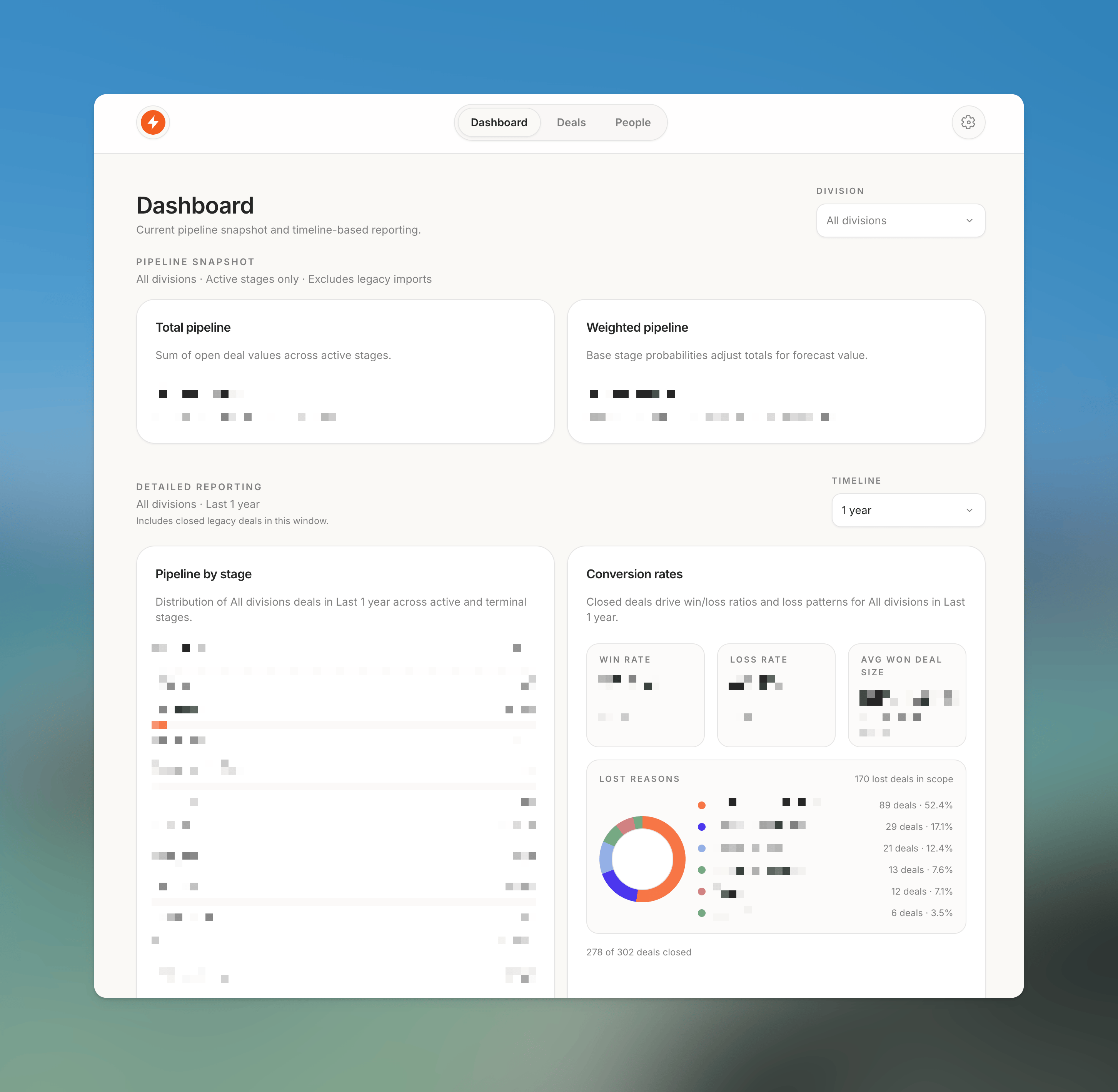
This weekend I used Codex CLI paired with the Ralph Wiggum approach to build a replacement CRM at Mostly Serious. We previously used Pipedrive, and it did the job but with quirks we didn't like. We also only used a handful of features, so it was overkill for our needs.
Building the replacement this weekend felt like a genuine turning point. This approach is substantially different from my past experiences with Claude Code, Codex, or Cursor alone. I was feeding direction, taste, tickets, and judgment into a machine and getting quality, test-ready versions back on the other side. At any point I could toss new stories into the prd.json file and know they'd soon be ready for review. I've attempted this project seven or eight times with various models and tools, and it always collapsed once complexity ramped up. This approach kept the AI on track and felt like a real working partner throughout.
Key Takeaways
- The Ralph Wiggum (a truly terrible name) approach: This method can be summarized as giving the AI a list of tasks, the ability to track its progress, and autonomy over when and how those tasks get done. After diving into it head first, I'm even more convinced this pattern is coming to every type of knowledge work this year, not just development.
- The critical component: It resets the model's context window (the thing that makes it dumb over time) between each task without losing awareness of where it's at in the project lifecycle. This is where many past attempts failed. It feels much more like handing an employee tasks to complete.
- Lots of Iteration: I started with 14 stories (tasks). And I ended with 148 completed. The process was very iterative, feeling more like a collaboration than a waterfall approach.
- Planning + execution split: I kept one Codex instance dedicated to planning and adding new stories as I reviewed the work. I'd ramble about stories it needed to add. Then Ralph would spin up separate Codex instances to knock out the work in a loop, tackling up to 30 stories per run.
Current AI & Tech Stack
The other layer that made this process easy was the tech stack. I've been using some combination of these tools for the past year and they've become increasingly easy to leverage with AI tools.
AI Tools:
- Cursor: For answering questions and making plans, but not much coding.
- Codex CLI: Follows directions well and digs deeper than Claude Code. Used for 95% of the CRM development.
- Claude Code: I find CC to be more creative than Codex, though Opus 4.5 is the most creative model when used inside of Cursor, for whatever reason.
- GPT 5.2 Pro: For deeper planning and in-depth code reviews.
Tech Stack:
- Next.js + Tailwind CSS
- Supabase for data storage
- Clerk for auth
- Vercel for hosting
Time Investment
Start to finish: ~6 hours of attention, only a couple hours of real focused work (planning and, annoyingly, data migration from Pipedrive). If you count the time planning and working through kinks from previous attempts, I'd likely be around 40 total hours.
The Future
It seems clear to me that this is the future of knowledge work. Everyone, not just developers, will be using these agentic loops to complete large scale projects in 2026. This is a glimpse at the future of work.